Choosing the right countertop fabricator in El Paso is the single biggest decision in your kitchen or bathroom project — bigger than the stone itself. We've been a family-owned stone fabricator on Gateway Blvd E since 1985, and this buyer's guide walks you through what a fabricator actually does, the questions to ask before you sign a contract, and the red flags that mean you should keep looking.
What Does a Countertop Fabricator Do?
Many homeowners mistakenly believe that a countertop fabricator is nothing more than someone who cuts slabs. It's like saying a surgeon merely performs incisions, without acknowledging the skills required behind that process. A good fabricator does a lot more than cutting, and understanding the nuances of their work can help you choose the right one.
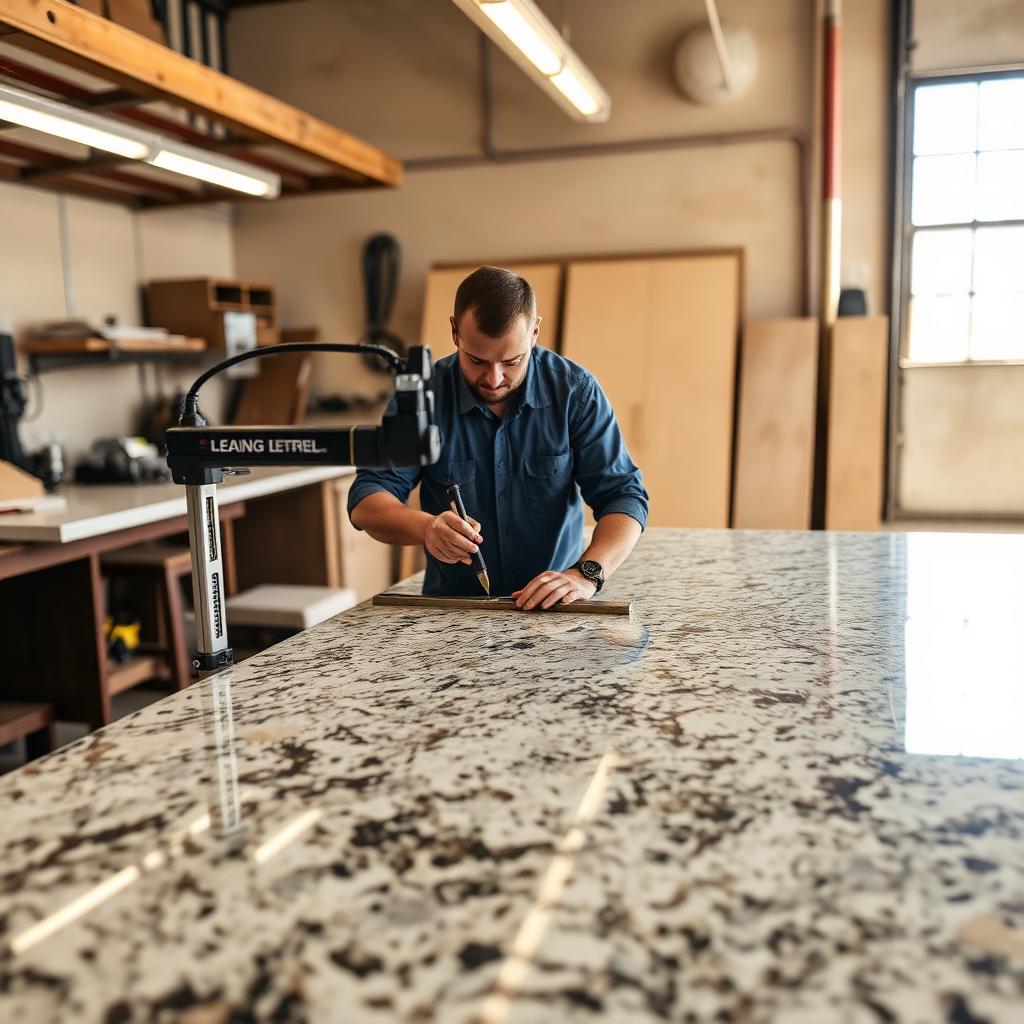
We take raw stone slabs and shape them into the exact countertop designs for kitchens, bathrooms, and fireplace surrounds — from digital templating through the final countertop installation. At our showroom on Gateway Blvd E, we walk clients through our process to demystify each step of fabricating countertops.
An in-depth look at the process: first, you pick your slab — the actual granite, quartzite, quartz, or marble slab that's going into your home, not a small sample. Because we obtain slabs directly from Brazil, our inventory is unlike anything else in the Borderland. Next comes digital templating, where our technician takes laser measurements of every angle of your countertop space to create a precise digital map — no guesswork, no cardboard templates. Then CNC cutting and shaping, where computer-controlled machines cut the slab to your template and finish the exact edge profile you chose (bullnose, eased, beveled, ogee, or anything else). Then finishing, where the slab is polished or honed and sink and cooktop cutouts are made. Finally, installation, where the slabs are set into your home, seams are joined, and everything is leveled onto your cabinets.
Each step matters. When a step is skipped, rushed, or overlooked, you end up with unsightly gaps or seams that catch your attention every morning — never a good outcome for homeowners.
Why the fabricator is more important than the stone slab: this is a mistake we see all too often. People find a beautiful slab of quartzite and then pick a fabricator. The end result is unsightly edge detailing or an obvious seam in the middle of an island. The stone is beautiful, but the fabrication is anything but. That's what separates work that looks like something from a magazine from something merely acceptable — and what sets an experienced fabricator apart in El Paso's arid Borderland climate. Temperature swings cause countertops to shift. A skilled fabricator knows this and plans for it. Two restaurants can use the same ingredients and turn out completely different meals — one forgettable, one memorable.
How a fabricator differs from an installer: some companies only do the install, not the fabrication. They purchase pre-cut pieces from another company and simply set them in place. A real fabricator manages the full process themselves — exactly what our El Paso family business has done since 1985. Here's the surprise: some businesses that call themselves fabricators don't actually cut the stone themselves. They have it cut in another city and bring the finished product to your home. Always ask where the piece will be cut. If they can't show you their fabrication area, be suspicious. A fabricator owns his own cutting equipment and completes the job in-house. Full-service fabrication means fewer hands touching your countertop and one company standing behind the finished product — instead of three companies pointing fingers when something goes wrong. Take a look at our El Paso countertop fabrication page for a walk-through of our process.
Key questions to ask before hiring a stone countertop fabricator: we've seen hundreds of countertop installation projects in El Paso since 1985, and we've watched homeowners skip this step over and over. They get excited about their new slab, choose a color they love, sign a contract — and never ask the right questions. Choosing the wrong fabricator can cost months of frustration. Before you get carried away by the excitement of a new slab, take a step back and ask these questions, then listen carefully to how the fabricator answers.
Questions on experience and process: how many years have they been fabricating stone countertops? A family business with decades of experience beats someone who started last year. Do they fabricate and install in-house, or sub the work out? Some subcontractors do excellent work, but you have the right to know where your stone is being cut and installed. Then dig deeper: Can I see your fabrication shop at work? Do you template digitally or manually? Who specifically will install my countertop? Where will the seams appear on my kitchen or bathroom countertop? Who's responsible if my slab breaks or cracks? A good fabricator will be transparent and even welcome you to walk through our Gateway Blvd E shop.
Questions on materials and sourcing: this matters more than most homeowners realize. We obtain our stone directly from Brazil, which lets us hand-pick for quality and selection in ways most intermediary suppliers cannot. Not every fabricator in the Borderland does this. Ask whether you can hand-select the actual slab you'll receive. Granite and quartzite have natural variation — a sample chip on a website is not what you'll get in the full slab. A reliable fabricator will let you see and approve the exact slab going into your home. Ask about material options too. If you're considering quartz or marble for a bathroom vanity top, a good fabricator will discuss the real pros and cons — without pressuring you into the priciest option.
Questions on timeline and job site: what does installation day actually involve? How many technicians will be on-site? How long will it take? Will they disconnect and reconnect your plumbing, or do you need a separate plumber? El Paso's arid environment affects adhesive and sealant curing differently than humid climates. Your fabricator should know this and plan accordingly. Ask for a written schedule from template to final install, ask who handles debris removal and cleanup, ask if they are fully insured and can provide proof, and ask how they'll protect floors and cabinets during install. A common issue in Upper Valley and East El Paso: homeowners hire a fabricator who gives a vague 'two to three weeks' estimate and then goes quiet. A reliable professional gives you a specific timeline and sticks to it. The biggest tell is this — ask for references from recent clients. Not website testimonials. Real phone numbers of El Paso-area customers who had work done within the last six months. A fabricator who balks at that has told you everything you need to know. Give us a call at 915 350 8100 or stop by our Gateway Blvd E location and we'll walk you through every step before you spend a dime.
Red Flags That Indicate a Low-Quality Fabricator
Since 1985 we've fabricated countertops in El Paso, and we've seen what happens when homeowners hire the wrong shop. Sliced slabs. Fissures you can feel with a fingertip. Edges that don't line up. These aren't the fault of bad stone — they're the result of bad fabrication. Knowing what to avoid can save you thousands of dollars and months of grief.
No physical showroom or slab yard: a fabricator who can't or won't show you stone you can touch in person is a concern. Images on a screen will never compare to what granite or quartz looks like in your kitchen under your lighting. Our Gateway Blvd E showroom stocks full slabs so you can touch the stone, see the vein patterns, and compare against your cabinet finish. If a fabricator tells you to 'just pick one from the website,' you're likely dealing with a middleman rather than a real fabricator.
Vague about the equipment they use: ask any fabricator what equipment they use to cut and finish stone. A real shop can tell you immediately — CNC machines, wet saws, polishing equipment, and so on. Low-quality fabricators tend to give vague answers or say 'we have our way of doing it.' We've seen fly-by-night operators show up in the Borderland with handheld grinders and portable saws. That equipment simply can't produce the tight seams and crisp edges your countertops deserve. It's not just about owning the right equipment — it's about having the trained crew to run it.
Warning signs you should never ignore: the fabricator refuses to let you visit their shop; they can't show pictures of recent El Paso projects; they won't use a template and try to measure the job with only a tape measure; they pressure you to pay the full cost up front; they have no Google reviews, or reviews mention cracking and poor communication. Of all of those, the biggest warning sign is refusing to template. Digital templating exists for a reason — it records every angle and curve of your project. A tape measure simply can't do that. We recently had a homeowner near Cielo Vista come to us after another fabricator cut a quartz countertop two inches too short on one side. They had eyeballed the measurement. We had to start over with a different slab.
They won't put a timeline in writing: if a fabricator won't give you a written timeline, that's not a good sign. El Paso homeowners deserve to know exactly when their kitchen countertops and bathroom vanity tops will be installed. We provide our customers with a written scope of work covering material selection, fabrication timeline, and installation day. If a fabricator can't do that, they may be taking on too many projects — or lack the inventory to fulfill orders.
How to protect yourself: ask direct questions, visit the fabricator's shop, and look at their past work. A family-owned fabricator with decades of experience won't dodge questions or brush off concerns. We source our stone directly from Brazilian quarries, which means we can trace every slab back to its source. That level of transparency is what separates good fabricators from the rest. When you're comparing countertop fabricators in the El Paso area, visit our Gateway Blvd E showroom and see the difference for yourself. We'll show you how we work, what goes into each cut, and what sets us apart.